These are NOT books about Jim or The Doors. These are books that influenced Jim and that he cited or referenced.
Ray Manzarek wrote, "So Jim’s bookshelf was very eclectic, but also standard, de rigueur Evergreen Review, New York City hipster, San Francisco, City Lights Bookstore, beat jivester, jivenik, cool cat. In other words, we were all reading the same thing. John DeBella had the same books that Jim had, that I had, that Phil Oleno had, that Dennis Jacob had, and a lot of other guys had. Except Jim had more! A wall of books. And it seems he had read them all; nothing in reserve for future reading. He was able to tell you the author and title of any book he had.
He would challenge people, “I’m gonna turn my back. Take a book off the shelf, open it to any page, read me a line - maybe I’ll need more, maybe a couple of lines - and I’ll tell you the title of the book and the author of the book. If I’m wrong…I’ll buy the beer. If I’m right, you buy…Corona or Tecate.” Jim Morrison drank free beer 95 percent of the time."
 Light My Fire
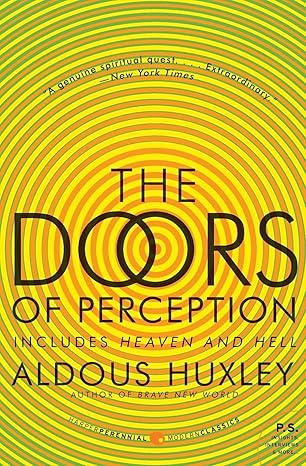
The Doors took their name from the title of Aldous Huxley's 1954 book The Doors of Perception, which was inspired by a line from William Blake's The Marriage of Heaven and Hell:
"If the doors of perception were cleansed, everything would appear to man as it is: infinite".
The book is a philosophical essay that explores mescaline and the mental suffering of schizophrenics. It influenced research into the drug and helped redefine it as a mystical experience with potential psychotherapeutic benefits.
 Doors of Perception
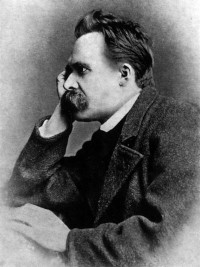
Any and all books by Nietzsche. Densmore said that Nietzsche is what killed Jim. I think he said that because of Nietszche's quote "That which does not kill me makes me stronger" as it inspired Jim to destroy himself with dangerous behavior.
Jim improvised an "Ode to Nietzsche" on the piano.
Also, in one of the biographies, adolescent Jim used some money he was suppossed to buy clothes with to instead buy books of Nietzsche.
 Fredrick Nietzsche
Jim is often compared to the poet Arthur Rimbaud. A college professor, Wallace Fowlie, wrote a book about it as Jim had written the professor a letter saying he carried the professor's translation of Rimbaud's poetry. "Just wanted to say thanks for doing the Rimbaud translation," Morrison had written. "I needed it because I don’t read French that easily…I am a rock singer and your book travels around with me."
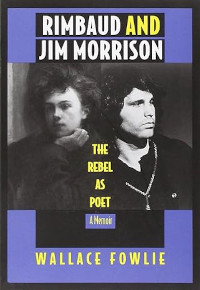
Rimbaud, by late adolescence and early adulthood, produced the bulk of his literary output. Rimbaud completely stopped writing literature at age 20. Rimbaud's father was an infantry captain who had risen from the ranks; he had spent much of his army career abroad.
At Collège de Charleville Rimbaud became a highly successful student, his schoolmasters remarked upon his ability to absorb great quantities of material. He won eight first prizes in the French academic competitions in 1869 and the following year won seven first prizes.
Rimbaud's behaviour became openly provocative; he drank alcohol, spoke rudely, composed scatological poems, stole books from local shops, and abandoned his characteristically neat appearance by allowing his hair to grow long... he wrote letters about his method for attaining poetical transcendence or visionary power through a "long, immense and rational derangement of all the senses... The sufferings are enormous, but one must be strong, be born a poet, and I have recognized myself as a poet".
Rimbaud... led a wild, vagabond-like life spiced by absinthe, opium, and hashish. The Parisian literary coterie was scandalized by Rimbaud, whose behaviour was that of the archetypal enfant terrible, yet throughout this period he continued to write poems.
Stéphane Mallarmé described him as a "meteor, lit by no other reason than his presence, arising alone then vanishing" who had managed to "surgically remove poetry from himself while still alive".
 Rimbaud and Jim Morrison: The Rebel as Poet
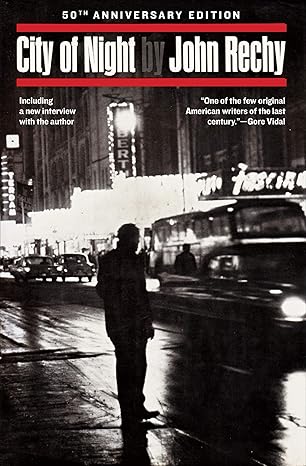
According to Danny Sugerman, Jim gave him this book to read. I tried to read it but couldn't get through it. It's just endless gay sex.
"Bold and inventive in style, Rechy is unflinching in his portrayal of one anonymous “youngman” and his search for self-knowledge and love within a furtive, neon-lit world of male hustlers, drag queens, closeted cops, and fetishists. As the narrator moves from El Paso to Times Square, from Pershing Square to the French Quarter, and through the lives of an extraordinary collection of characters who dwell in this clandestine world, Rechy delivers a portrait of the edges of America that has lost none of its power to move and exhilarate."
 City of Night
Journey to the End of the Night
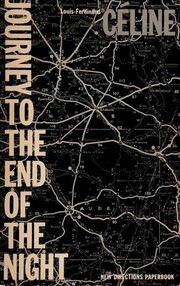
"Journey to the End of the Night is a literary symphony of cruelty and violence that hurtles through the improbable travels of the petit bourgeois (and largely autobiographical) antihero, Bardamu: from the trenches of WWI, to the African jungle, to New York, to the Ford Factory in Detroit, and finally to life in Paris as a failed doctor. "
The lyrics "some are born to sweet delight; some are born to endless night," comes from William Blake's 1803 poem "Auguries of Innocence".
 Journey to the End of the Night
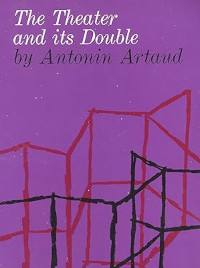
Artaud challenged western rationale. He also went one step further, believing that "civilization had turned humans into sick and repressed creatures and that the true function of the theatre was to rid humankind of these repressions and liberate each individual’s instinctual energy."
In this way, he believed that assaulting an audience’s senses helped separate them from their repressions. Confronting the grotesque could liberate a person from the clutches of the strict influence of the civilized.
 Theater and its Double

"The Portable Beat Reader collects the most significant writing of these and fellow members (and spiritual descendants) of the Beat Generation, including Neal Cassady, Gregory Corso, Diane di Prima, Bob Dylan, Leroi Jones, and Michael McClure. In poetry, fiction, essays, song lyrics, letters, and memoirs, it captures the triumphant rudeness, energy, and exhilaration of a movement that swept through American letters with hurricane force."
Jim was swept up in that movement.
"…they shambled down the street, and I shambled after them, as I've been doing all my life, after people who interest me, because the only people for me are the mad ones, the ones who are mad to live, mad to talk, mad to be saved, desirous of everything at the same time. The ones who never yawn or say a commonplace thing, but burn, burn, burn, like fabulous yellow roman candles exploding like spiders across the stars and in the middle you see the blue center light pop, and everybody goes Awwwwwwwwwww………………!"
- Jack Kerouac, On the Road
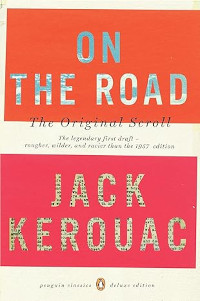
I read this many years ago and didn't quite get what excited people so much about it. I want to revisit it and reread it as I think the point of view that might be a bridge to understanding it is that youth getting access to cars and driving, just driving anywhere, was a huge, liberating thing that could be compared to today's youth getting access to the internet. With a car, the youth weren't trapped in a do nothing town, but could go meet new people and check out new scenes and new ideas. With the internet, you weren't stuck with whatever was in the local library or the people at the soda shop, but the whole world.
I've linked to the original draft of On the Road that is referred to as the "scroll". "The scroll is slightly longer and has a heightened linguistic virtuosity and a more sexually frenetic tone. It also uses the real names of Kerouac’s friends instead of the fictional names he later invented for them. The transcription of the scroll was done by Howard Cunnell who, along with Joshua Kupetz, George Mouratidis, and Penny Vlagopoulos, provides a critical introduction that explains the fascinating compositional and publication history of On the Road and anchors the text in its historical, political, and social context."
 Beat Poets
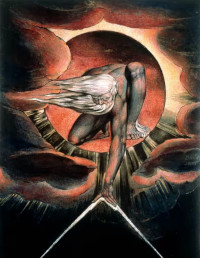
From "Auguries of Innocence" by William Blake:
Every Night & every MornSome to Misery are BornEvery Morn and every NightSome are Born to sweet delightSome are Born to sweet delightSome are Born to Endless Night
The Doors' band name is taken from "The Marriage of Heaven and Hell" poem by William Blake and is as follows:
"If the doors of perception were cleansed, things will appear to man as they truly are: infinite."
 William Blake
Been Down So Long It Looks Like Up To Me
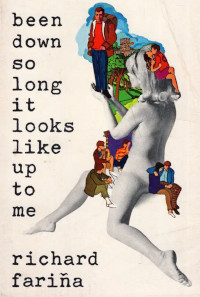
"Richard Fariña evokes the Sixties as precisely, wittily, and poignantly as F. Scott Fitzgerald captured the Jazz Age. The hero, Gnossus Pappadopoulis, weaves his way through the psychedelic landscape, encountering-among other things-mescaline, women, art, gluttony, falsehood, science, prayer, and, occasionally, truth."
I read this in college. I read a lot and dug the fact that Morrison was a big reader, too. I didn't enjoy this book very much and I guess I read it out of some kind of duty. A duty to what, I don't know. The only thing I vaguely remember about the book is the hero being transfixed by a pubic hair visible on the chest of the woman he was getting intimate with. And the phrase "hermetically sealed". I just googled that phrase as I remember it from the book but don't remember what it means. It means, "something is tightly closed so that no air can enter or leave it". Huh. Strange brain of mine.
 Been Down So Long It Looks Like Up To Me
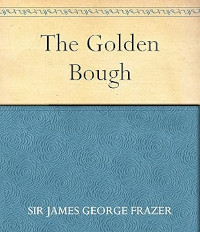
"The Golden Bough offers readers a modernist approach to discussing religion, treating it dispassionately as a cultural phenomenon rather than from a theological perspective... the book is one of the great studies of mythology and religion and continues to be widely read throughout the world."
This the book where Jim got the phrase "Not to touch the earth, not to see the sun" sung in the Celebration of the Lizard. Curious about what exactly it means? Read the book!
I was compelled to read The Golden Bough because not only did Jim read it, but Walter Kurtz read it as well as shown in a shot from Apocalypse Now:
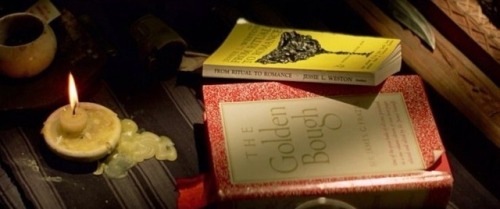
 Golden Bough
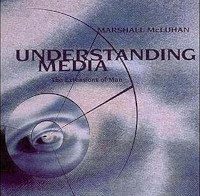
McLuhan, "societies have always been shaped more by the nature of the media by which men communicate than by the content of the communication".
"Whoever controls the media, controls the mind." Jim Morrison
"The medium is the message" is a phrase coined by the Canadian communication theorist Marshall McLuhan and the name of the first chapter in his Understanding Media: The Extensions of Man. McLuhan proposes that a communication medium itself, not the messages it carries, should be the primary focus of study.
"The medium is the message, and the message is me." Jim Morrison
 Understanding Media
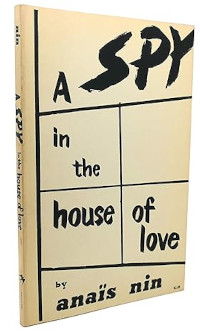
"The novel follows the character of Sabina, a woman who enjoys the sexual licence typically associated with men. Sabina wears extravagant outfits and deliberately avoids romantic commitments. She pursues sexual pleasure in isolation of any other romantic attachment."


