There is an eagerness to make stuff up about The Doors and the eagerness appears quite a bit on Reddit.
It is similar to the misinformation seen on the internet in general.
In this case on reddit.com: jim morrison and his first love mary werbelow
The poster alleged that a woman in Ray Manzarek's student film is Jim Morrison's first love Mary Werbelow. There's no reason to believe that the woman in the film is Mary and the poster seems to know that.
The redditor slowed the film to highlight this woman:
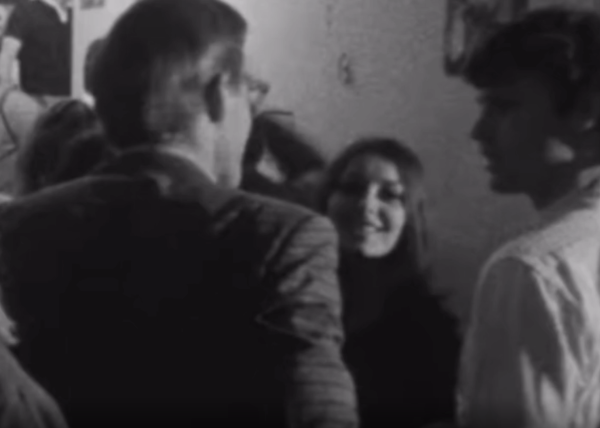
It does look like her:

... but:
Ray makes no mention of her when he writes about Induction (the black and white student film posted), but he writes about her in other parts in his book. I don't see why he would fail to mention her when writing about Induction.
Ray writes in Light My Fire: My Life with The Doors, "The two films that I directed, however, still exist... And you can, today, see me and Jim together on the screen before the Doors were even conceived of. A party is taking place in Induction and Jim and I exchange a conspiratorial moment together. It’s brief, but there we are, young pups together."
Another redditor says about Mary, "So sad" and another redditor writes the article about Mary is a "beautiful sad story".
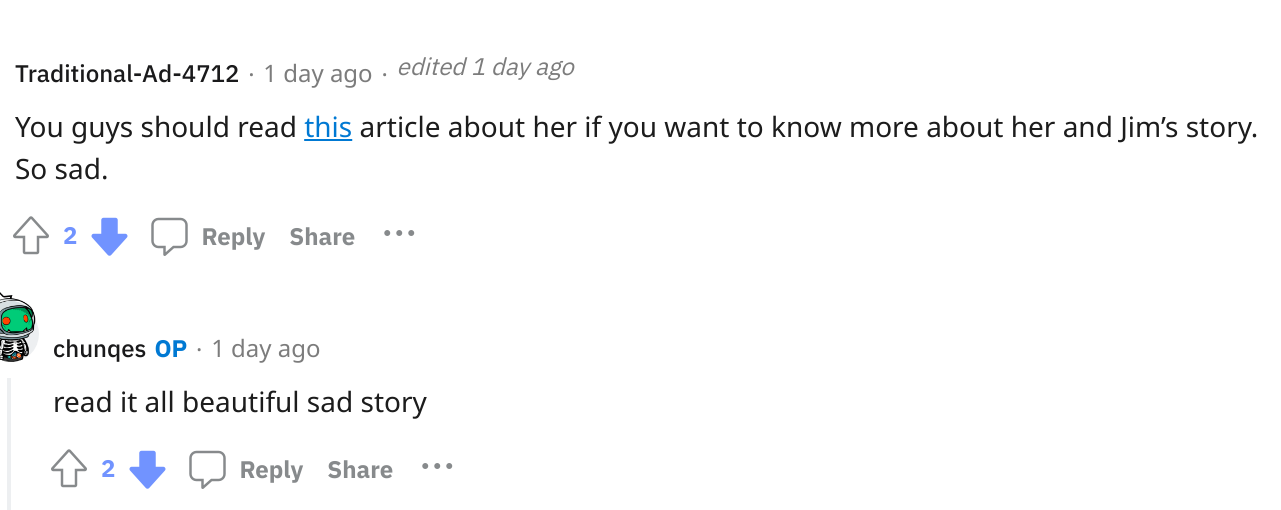
The mythology of Mary and Jim is a big part of the narrative. Fans like to imagine how much Jim was hurt by her rejection and how it inspired him. It's all about making Jim into a tragic figure.
It's a viral myth and lives beyond reddit. The myth gets propagated in the comments on youtube that hosts Ray's Induction student film. The commenter hits all the notes of the myth; Mary being the inspiration for songs, the tragedy of their separation and how sad and beautiful it all is.
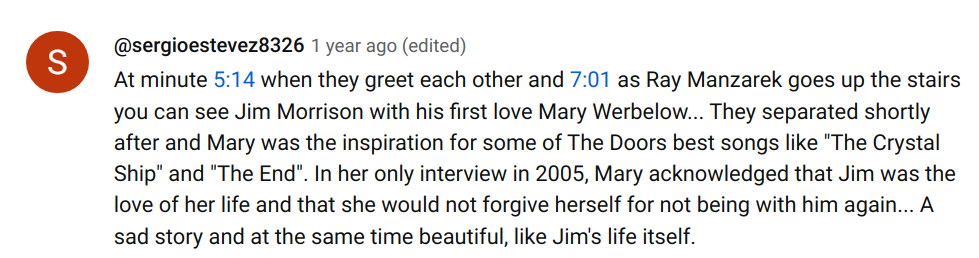
The truth about Mary is sad but not consistent with the misinformation.
Something that interests me is that fan's don't want to know the truth. They want the comforting myths. It's similar to Mormons discussing their "literature". There are so many holes and inconsistency in Mormon stories, one would have to really work to believe the stories and ignore the truth.
Why is that? Marlon Brando may have an answer. Brando had a great insight as to why the film he starred in On the Waterfront was popular.
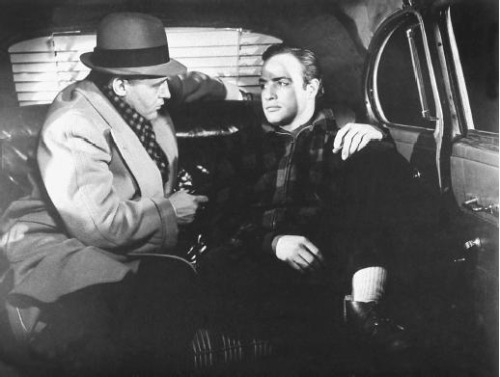
Brando wrote, "there was a scene in a taxicab, where I turn to my brother who’s come to turn me over to the gangsters and I lament to him that he never looked after me, he never gave me a chance, that I could of been a contender, I cudda been somebody, instead of a bum…
And people often spoke about that, “Oh, my God, what a wonderful scene, Marlon, blah blah blah.” It wasn’t wonderful at all. The situation was wonderful.
Everybody feels like they could have been a contender, they could have been somebody, everybody feels as though they’re partly bum, some part of them. Not bum, but they are not fulfilled and that they could have done better, they could have been better. Everybody feels a sense of loss about something.
So that was what touched people. It wasn’t the scene itself.
There are other scenes where you’ll find actors being expert, but since the audience couldn’t clearly identify with it, it just passed unnoticed. Wonderful scenes never get mentioned, only those scenes that affect people."
How does this apply to Doors fan and the mythology of Jim and The Doors?
Doors fans listen to their music and really feel something. It's the soundtrack to their lives. And then they look into the history of the Doors and find things they can identify with. It doesn't matter if it's true. In fact, if the truth means they identify less with it, then the truth is avoided.
Fans see themselves in Jim. They had a girl they really connected with and lost, just like Jim. It casts their own life into a tragic hue that gives depth to what is likely a meaningless existence. When they listen to Doors and hear Jim, they're more likely to feel what he's expressing in the songs and the identifying bond becomes stronger. And the desire for truth is diminished.
Here are a few of the myths that get propagated.
A favorite misinformation by redditors is that Jim's father started the Vietnam war or was involved in the Gulf of Tonkin incident. Admiral Morrison was there, but none of his ships were involved in the Gulf of Tonkin incident.
If his father started the Vietnam war and his son Jim was in the states against it and protesting it, how dramatic that would be! Doors fans want that drama. But there really is plenty of drama in the Doors story and it doesn't have to be made up.
Trying to handle the misinformation seems pointless as people don't care about what is true, they just care about getting engagement, likes, upvotes, etc. and the fans want their dramatic tragedy.
Then there are those like Mormons talking about Joseph Smith, those that question his legitimacy are cast outside the in-group.
Originally, saying Jim Morrison was alive and faked his own death signified to other Doors fans that you were a real, die hard fan. As more and more time passed, the possibility of Jim being alive diminished greatly and only weirdos believe that Jim is still alive. Still, articles come out professing Jim is alive. It's not about truth, it's about generating clicks.
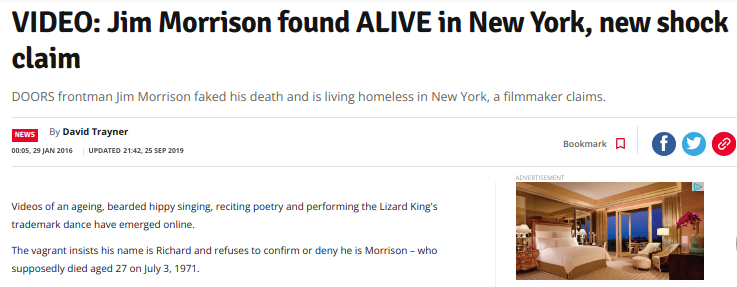
Truth is often an obstruction to engagement. Never more so on Twitter. (A look at how Twitter incentivizes willful, deliberate misinformation on youtube.)
People just want to believe in something. And what you believe makes you part of a group. And the group is either the "in group" or the "out group". Whether it's about The Doors, a political party, a religion, it doesn't matter, what matters is that you know the language and narratives of the in-group and parrot them to signify you're in their tribe and on their side.
I remember one kid sharing with others in high school that "Mr. Mojo Risen" was an anagram for Jim Morrison. The high school kid was imparting knowledge. And then others would add to it, how Jim would get drunk, how he called himself the Lizard King and so on. It's in-group sharing. There's a lot of that amongst Doors fans.
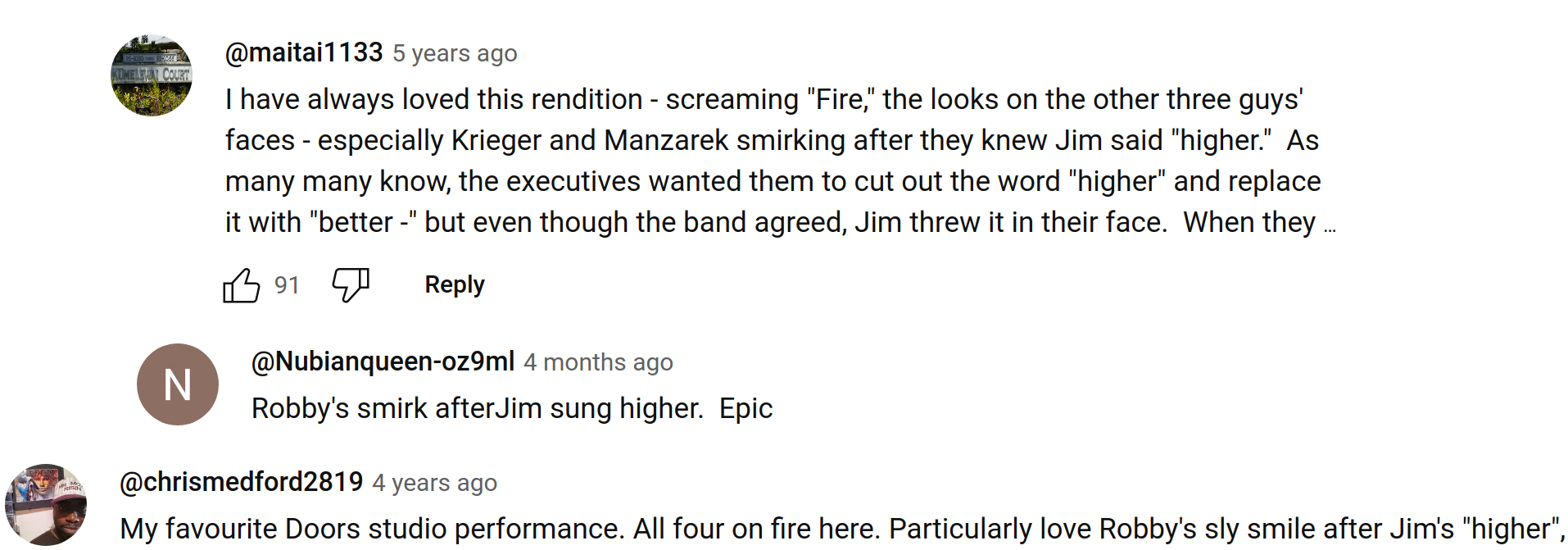
Fans like to share with each other about how Jim screamed "higher" into the camera on the Ed Sullivan show when he was told not to say the word "higher". It fits the rebel image that people identify with and doesn't matter if it's true or not.
Fans participate in the "in-group" on the youtube video of the Ed Sullivan performance. The myth is viral and fans don't just want to be in on it, but promoters of it. Jim as a "rebel" that they identify with. Here's fans reaction in YouTube's comments to the Ed Sullivan show performance that happened in 1967. They share about Jim screaming "higher" - which didn't happen - and Robbie smiling as if humored by Jim being a rebel.
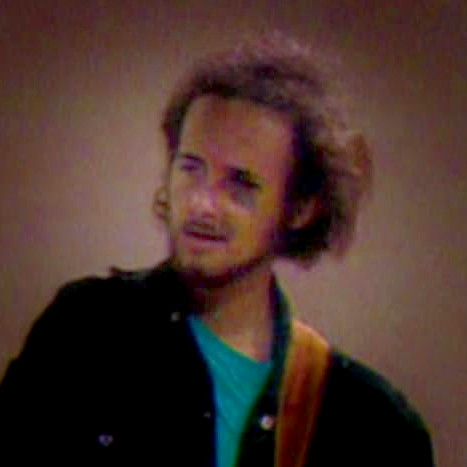
There is also Robbie's black eye that he had when they performed on the Smothers Brothers. What he writes in Set the Night on Fire is a fitting end to this article:
"To this day, Doors fans will approach me and ask about my black eye on the Smothers Brothers show. It's the single most common question I get, even though everyone seems to think they're the first one to ever ask me about it.
I usually say Jim and I got in a fight before the show. Sometimes I'll say we were attacked by rednecks who didn't like our long hair; other times I'll say Jim and I were drunkenly battling each other. Sometimes I'll say I hit my eye on a desk. Part of the reason I do that is just to be mischievous. I used to love it when Jim gave conflicting stories to the press to keep people guessing about us, and I like carrying on that tradition. But part of it is that it's just easier to offer a phony answer than to constantly relive one of the most difficult experiences of my entire life.
My black eye should serve as a reminder that no matter how much a person thinks they know about the Doors, there's always more to the story. Much more."
To find out how Robbie really got a black eye, you have to read his book Set The Night On Fire!


